Contaminated diesel causes £24k in tractor damages on UK farm

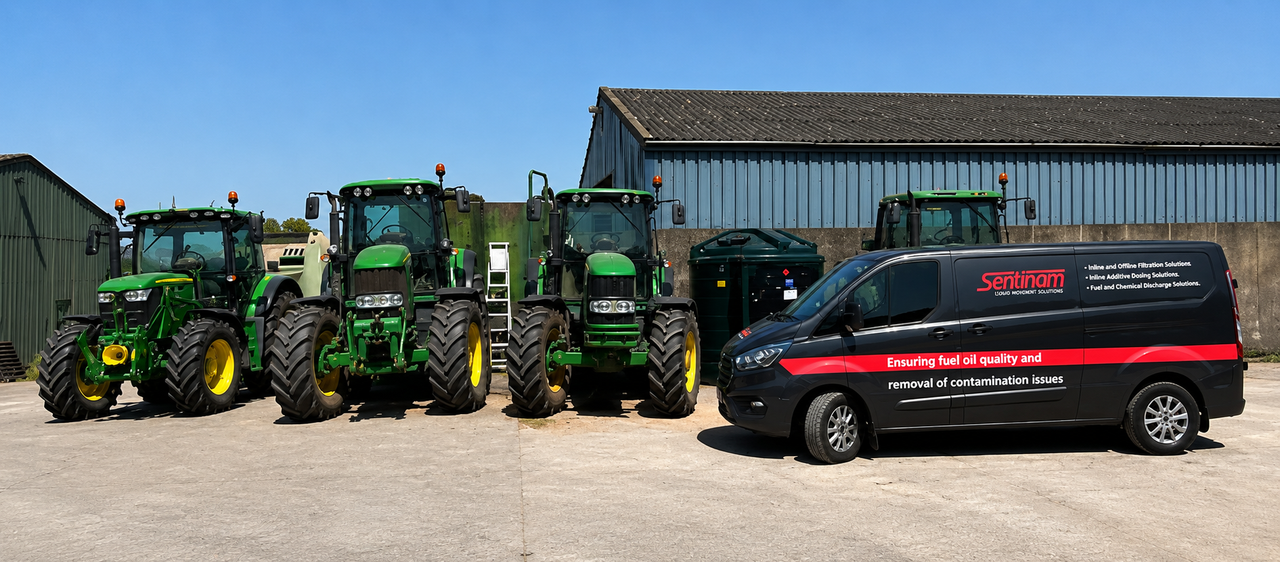
A commercial farm based in Herefordshire has undergone a major overhaul of its fuel infrastructure after 5,000L of contaminated red diesel caused £24,000 in damages to four John Deere tractors.
The affected fleet of tractors, belonging to Miles Hope Farm, reportedly suffered fuel injector failures due to contaminated amounts of red diesel, leading to unnecessary operational downtime along with repair costs.
Following the incident, the farm's service and site engineering manager, Carl McIntosh got in contact with Sentinam Liquid Movement Solutions to see if a permanent solution to this problem was possible.
Sentinam outlined that it first replaced an "ageing, single-skinned steel tank" on the farm with a new, fully bunded Harlequin Fuel Station 5000FS before also deploying a mobile GT fuel filtration skid to clean and salvage existing fuel.
The fuel filtration company stated that it replaced the steel tank as they have a habit of "naturally accumulating water condensation over time, creating a breeding ground for microbial contamination".
Sentinam noted that this issue is commonly known as "diesel bug" and it can "rapidly destroy fuel injection hardware."
Filtration process
According to Sentinam, a modern high-pressure common-rail diesel engines, such as the ones found in John Deeres, operate with "incredibly fine" tolerances, requiring an industry-standard fuel cleanliness code of ISO 18/16/13 or cleaner.
Before any contaminated fuel was filtered and salvaged, Sentinam used a GT particle counter to gauge the red diesel's cleanliness, which flagged at a "highly contaminated baseline" of ISO 19/17/15.
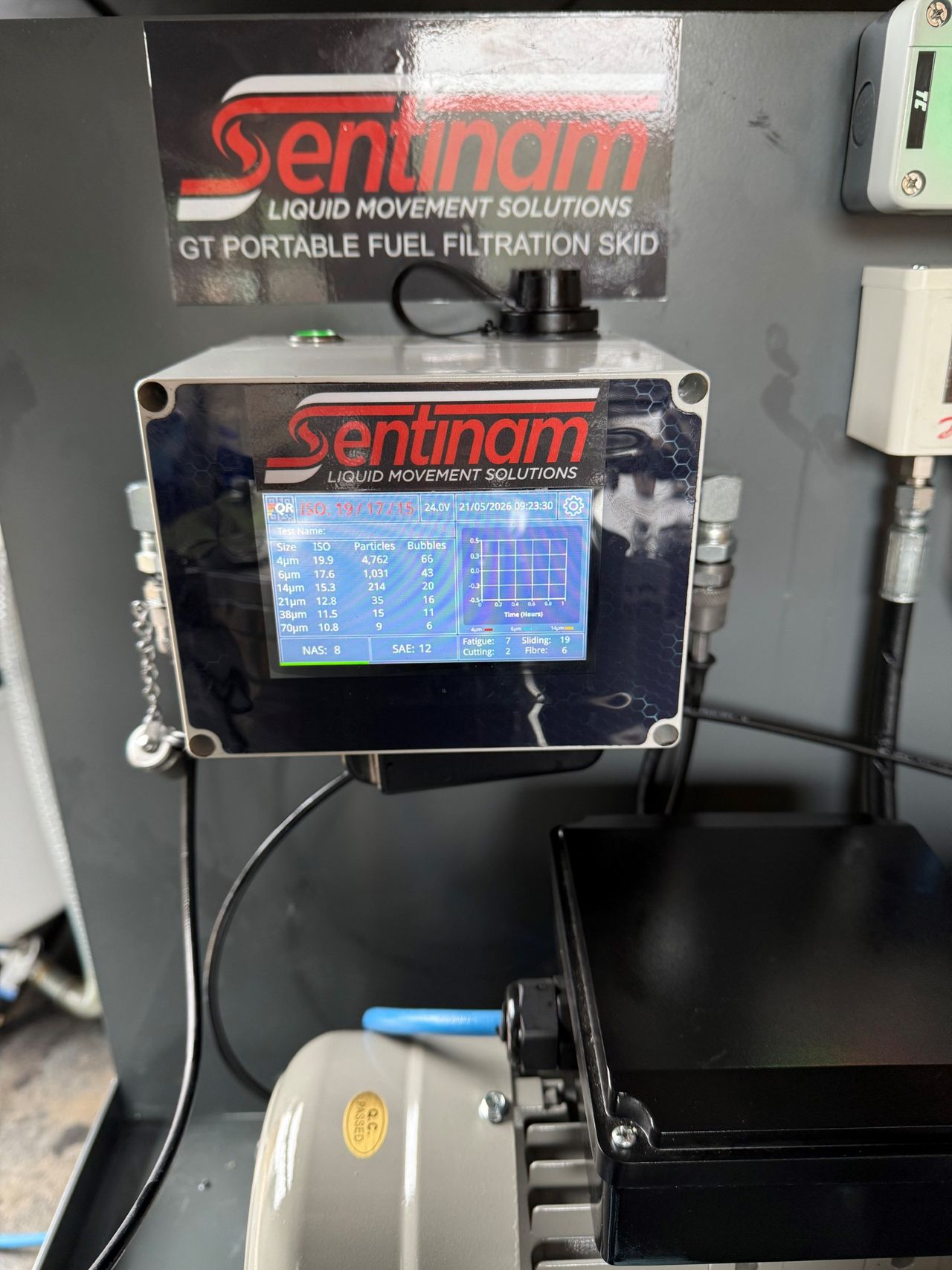
Sentinam said that it ran the fuel through multiple stages of magnetic particle removal, water separation and fine 3-micron particulate filtration, while also completing a secondary three-hour polishing loop inside the new Harlequin tank
Following filtration and polishing, the farm's red diesel was verified to have improved to a cleanliness code of ISO 11/10/9, over-performing the requirements mandated by agricultural engine manufacturers.
Sentinam
The managing director of Sentinam, Neil Turnbull commented: "Across the UK, millions of litres of diesel are discarded annually due to poor storage conditions, when much of it is entirely salvageable.
"As modern agricultural machinery becomes vastly moresophisticated, fuel cleanliness must be treated with the same priority as mechanical servicing.
"We are delighted to have saved Miles Hope Farm’s fuel asset while future-proofing their fleet," he added.